The best shop vac for a table saw has enough airflow for the saw’s dust port, a hose that fits without restricting flow, and filtration suited to fine wood dust. Here’s what to check before buying.
A shop vac can collect a substantial amount of table-saw dust, but the right choice depends on more than motor size. Look for a vacuum with strong airflow, a hose compatible with the saw’s dust port, a filter designed for fine dust, and enough capacity for the work you do. A dust separator can also help keep the filter from clogging quickly.
What to look for in a table-saw shop vac
Airflow and suction
Table saw dust collection depends mainly on moving enough air through the saw’s dust port. Manufacturers may list airflow in CFM and sealed suction or static pressure in inches of water lift. These figures are measured differently, so neither number alone predicts performance in a real setup.
For a practical comparison:
Favor a model marketed for dust collection rather than only general wet cleanup.
Compare airflow figures using the same measurement method when possible.
Remember that a long hose, narrow hose, sharp bends, clogged filters, and leaky connections reduce airflow.
A large motor does not compensate for an undersized hose or poorly sealed dust port.
A shop vac connected directly to a table saw may collect the dust that falls through the cabinet or exits the rear port, but it may not capture all airborne dust from an open blade area. Use the saw’s guard and dust port as designed, and follow the saw manufacturer’s instructions.
Hose diameter and compatibility
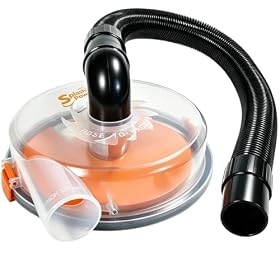
Hose size is one of the most important buying decisions. A narrow hose may fit a small dust port, but it can restrict airflow and clog more easily with chips. A larger hose generally moves more air, provided the saw’s port and adapter can accommodate it.
Check these measurements before ordering:
The outside or inside diameter of the table saw’s dust port, depending on how the adapter fits.
The hose cuff diameter.
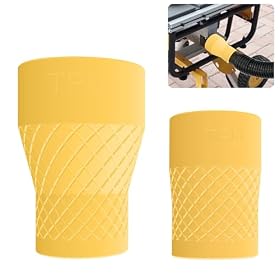
Whether the connection needs a stepped adapter, reducer, or custom dust-collection fitting.
Whether the hose locks securely or tends to pull off during use.
Avoid relying on a friction fit that leaks badly. If an adapter is necessary, choose one that maintains the largest practical passage and seal unused openings around the saw’s dust system.
Filtration for fine wood dust
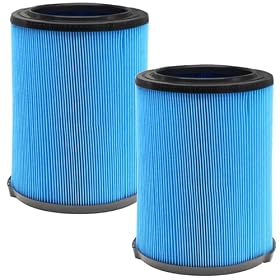
Wood dust is not the same as large chips and shavings. A standard shop-vac filter may catch much of the visible debris, but fine particles can load the filter quickly or pass through inadequate filtration.
A filter area large enough for the expected workload.
A sealed filter and collection system.
A compatible HEPA filter if reducing fine-particle exhaust is a priority and the vacuum manufacturer offers one for that model.
HEPA filtration does not make an unsafe dust-collection setup safe by itself. Leaks before the filter, an open saw cabinet, or dust escaping at the blade can still expose you to particles. Keep the filter clean according to the manufacturer’s instructions, and use appropriate respiratory protection and ventilation when needed.
Capacity and filter loading
A compact vacuum is easier to store, but its drum or bag may fill quickly when connected to a table saw. A larger capacity means fewer interruptions, although it also adds size and weight.
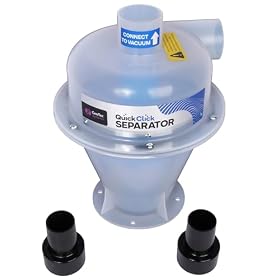
Consider a dust separator between the saw and vacuum. A separator can collect heavier chips and sawdust before they reach the shop-vac filter. This helps preserve airflow and extends the time between filter cleanings, but it does not replace the vacuum’s filter or eliminate the need for safe dust control.
If you cut mostly sheet goods, hardwood, or MDF, expect faster filter loading than when making occasional cuts in clean solid wood. MDF and similar materials can produce especially fine dust, so filtration and cleanup deserve extra attention.
Automatic tool activation
Some shop vacs have an outlet that starts the vacuum when a connected power tool turns on. This can be convenient, but verify that the outlet is rated for the table saw’s electrical load and that the manufacturer permits that type of connection.
A table saw may draw substantially more power during startup than during normal running. Do not connect equipment in a way that exceeds the vacuum’s outlet rating, circuit capacity, or the saw manufacturer’s instructions. If you are unsure about electrical compatibility, use separate controls or consult a qualified electrician.
Noise, mobility, and storage
Shop vacs can be loud, especially in a small workshop. A longer hose may let you place the vacuum farther away, but excessive hose length can reduce airflow. Choose a model with practical wheels, a stable base, and a cord or hose-storage system that will not interfere with the saw.
For a permanent table-saw station, consider how the vacuum will be emptied and how often the filter will need service. For occasional use, compact storage and easy setup may matter more than maximum capacity.
Recommended setup for a table saw
A basic setup usually includes:
A shop vac with a fine-dust filter.
The largest hose that fits the saw’s dust port without an extreme reduction.
A secure adapter or dust-collection fitting.
A dust separator if the saw produces frequent chips or large amounts of debris.
A blade guard and built-in dust port used according to the saw’s instructions.
A method for cleaning or replacing the filter without releasing a cloud of dust.
Keep the hose as short and straight as practical. Seal unnecessary gaps in the dust path, but do not block vents or modify electrical parts. Before cutting, confirm that the hose cannot contact the blade, belt, arbor, or moving material.
Product prices and availability are accurate as of the date/time indicated and are subject to change. Any price and availability information displayed on Amazon.com at the time of purchase will apply to the purchase of this product.
Shop vac versus a dedicated dust collector
A shop vac is usually the more practical choice for a compact workshop, portable table saw, or occasional woodworking. It is also useful for general cleanup and other tools.
A dedicated dust collector may be a better fit when you run a stationary table saw frequently, use larger dust ports, or connect multiple machines. Dedicated systems are designed around higher-volume airflow and larger collection containers, while shop vacs typically offer stronger suction through smaller hoses. The right choice depends on the saw’s port design, the hose diameter, the ductwork, and the amount and type of dust produced.
Do not assume that adding a large hose to a shop vac turns it into a dedicated dust collector. The vacuum and the entire collection path must be matched to the tool.
Product prices and availability are accurate as of the date/time indicated and are subject to change. Any price and availability information displayed on Amazon.com at the time of purchase will apply to the purchase of this product.
Common problems and quick fixes
The vacuum has poor suction at the saw
Check the filter first. A loaded pleated filter can sharply reduce airflow. Empty the container, clean or replace the filter as directed, and inspect the hose for packed sawdust.
Next, check for:
A crushed or sharply bent hose.
A clogged adapter or table-saw dust port.
A loose hose cuff or leaking connection.
An unnecessarily narrow reducer.
An open cabinet door or missing access panel that lets air enter before reaching the dust.
If airflow remains weak with a clean filter and an unobstructed hose, the vacuum may be undersized for the saw’s collection port or the motor may need service.
Dust is escaping around the blade
A shop vac attached to the rear or cabinet port cannot capture every particle produced above the table. Make sure the blade guard and upper dust-collection features are installed and adjusted correctly. Check whether the saw manufacturer provides a compatible overhead or blade-guard collection option.
Wear eye protection and appropriate respiratory protection when cutting materials that produce fine dust. Do not remove safety guards to improve collection.
The hose keeps falling off
The adapter may be the wrong diameter or may not have enough engagement. Use a compatible locking cuff or properly sized adapter rather than forcing the hose over an incompatible port. A connection that leaks or detaches repeatedly is a reason to replace the adapter or hose cuff.
The filter clogs too quickly
Empty the drum and inspect the filter. If the vacuum is collecting large chips directly from the table saw, add a compatible dust separator. Clean the filter using only the method approved by its manufacturer; aggressive shaking, compressed air, or washing can damage some filters.
If the filter loads rapidly even with a separator, the filter may be too small, unsuitable for fine dust, or nearing replacement. Choose a manufacturer-approved fine-dust filter rather than simply removing the filter.
Product prices and availability are accurate as of the date/time indicated and are subject to change. Any price and availability information displayed on Amazon.com at the time of purchase will apply to the purchase of this product.
When to replace the vacuum or hose
Replace the hose if it is cracked, crushed, permanently collapsed, or too small for the saw’s dust port. Replace the filter when it is damaged, cannot be cleaned effectively, or no longer seals correctly.
A replacement shop vac is reasonable when the motor is failing, the container or filter system is damaged, replacement parts are unavailable, or the vacuum cannot maintain useful airflow for the saw even after the hose, filter, and connections are corrected. Stop using equipment with damaged cords, melted plugs, exposed wiring, or unusual electrical behavior and have it inspected by a qualified professional.
Product prices and availability are accurate as of the date/time indicated and are subject to change. Any price and availability information displayed on Amazon.com at the time of purchase will apply to the purchase of this product.
Bottom line
For a table saw, prioritize a fine-dust filter, a compatible hose with the largest practical diameter, secure sealed connections, and enough capacity for your cutting volume. Add a dust separator for frequent use, and do not depend on the shop vac alone to control all airborne dust around the blade. Match every electrical connection and accessory to the manufacturers’ instructions.
FAQ
Can I use any shop vac with a table saw?
Not necessarily. The vacuum needs useful airflow, a filter suitable for fine wood dust, and a hose or adapter that fits the table saw’s dust port without excessive restriction. Check the electrical ratings if using an automatic tool-start outlet.
What hose size is best for a table saw shop vac?
Use the largest hose that fits the saw’s dust port and the vacuum without an unnecessarily narrow reducer. The correct size depends on the port and adapter dimensions, so measure both before buying.
Do I need a HEPA filter for table-saw dust?
A compatible HEPA filter can reduce fine particles in the vacuum’s exhaust, but it does not prevent dust from escaping at the blade, through leaks, or during emptying. Use the saw’s guards and dust ports, maintain the collection system, and follow appropriate respiratory-protection guidance.
Should I add a dust separator to a shop vac used with a table saw?
A dust separator is useful when the saw produces frequent chips or large amounts of sawdust. It can keep heavier debris out of the vacuum filter and help preserve airflow, but the shop vac still needs its proper filter.
Why does my table saw still make dust when connected to a shop vac?
The saw’s rear or cabinet port may not capture dust released above the table. Also check for a clogged filter, blocked hose, leaking adapter, incorrect setup, or an open cabinet. Keep the blade guard installed and use any manufacturer-approved upper collection option.