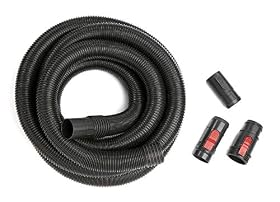
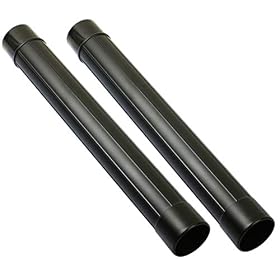
A long hose can make a shop vac much easier to use, but hose length alone does not determine performance. Compare hose diameter, airflow, attachments, filtration, and storage before you buy.
Best shop vac with a long hose
The best shop vac with a long hose should let you clean a large area without repeatedly moving the vacuum, while still providing enough airflow for the hose diameter and task. Look for a hose that is long enough for your workspace, flexible without collapsing, and compatible with the attachments you plan to use. A practical design also needs secure connections, manageable storage, and filtration suited to the debris you collect.
What matters most in a long-hose shop vac
Hose length
A longer hose increases your reach around vehicles, workshops, stairs, and construction areas. It can also reduce setup time because the vacuum stays in one place more often.
However, an unnecessarily long hose can be harder to store and may reduce usable airflow through friction and bends. Choose the shortest hose that reaches the areas you clean regularly, including enough extra length to move around corners and furniture.
As a general guide:
A shorter hose is easier to store and works well for benches, small garages, and spot cleanup.
A medium-length hose offers a useful balance for vehicles, floors, and general workshop work.
An extra-long hose is helpful for stairs, large garages, job sites, and cleaning from a fixed position.
A hose extension can be more flexible than buying a permanently long hose, but every added connection is another potential leak or separation point.
Hose diameter
Hose diameter affects both airflow and the size of debris the vacuum can handle. A wider hose is generally better for wood chips, leaves, larger dirt, and other bulky debris. A narrower hose is easier to handle and can work well with crevice tools and detail attachments.
Check the vacuum's inlet size and the diameter of the included hose. A hose that requires adapters may fit physically but still restrict airflow if the adapter creates a narrow passage. Make sure replacement hoses and accessories use the correct diameter or include a compatible adapter.
Airflow and suction
Manufacturers may list different performance measurements, and those numbers are not always directly comparable. Suction describes pulling force under restricted conditions, while airflow describes the volume of air the vacuum moves. For open-floor debris and larger particles, airflow is important. For tight gaps or a sealed nozzle, suction also matters.
A long hose adds resistance, especially when it is narrow, kinked, or partially blocked. If long-reach performance is important, prioritize a vacuum and hose system designed to work together rather than choosing a very long universal hose based only on length.
Hose construction
Look for a hose that is flexible enough to move easily but strong enough to resist crushing. Useful features may include:
Crush-resistant construction for use around vehicles and tools
Smooth interior walls that are less likely to trap debris
Swivel connections that reduce twisting
Locking cuffs or secure friction-fit ends
Reinforced ends, which often experience the most stress
A design that resists static buildup when collecting fine dry debris
A stiff hose may hold its shape better, but it can be tiring to use in a vehicle or on stairs. A very soft hose may be convenient but collapse more easily when bent or stepped on.
Match the shop vac to the cleaning job
Vehicle interiors
For cars and trucks, a long, flexible hose is often more useful than a very large vacuum tank. The hose should reach from the unit to the far side of the vehicle without dragging the vacuum against the paint or interior panels. A narrow hose or reducer can make detail attachments easier to control, but it may not be suitable for large debris.
Check whether the vacuum includes a crevice tool, upholstery nozzle, or small brush. If not, verify that standard accessories or an adapter will fit the hose.
Garages and workshops
A longer hose can keep the vacuum near a wall while you clean around benches, equipment, and vehicles. For sawdust and wood chips, pay close attention to hose diameter and filter requirements. Fine dust can clog a standard cartridge filter quickly, while larger chips may need a wider passage to avoid blockages.
If you connect the vacuum to a power tool, check the tool-port compatibility and whether the vacuum has an automatic start feature. Do not assume that a hose adapter also provides dust collection that is appropriate for every tool or material.
Stairs and large indoor areas
A long hose reduces the need to carry the vacuum up and down stairs. Choose a hose that remains manageable when extended and check whether the vacuum has stable wheels or a secure handle. A long hose is not a substitute for a safe carrying method; do not leave a heavy unit in a position where it can fall down stairs.
For indoor use, filtration is especially important. Use the filter and bag configuration recommended for the material being collected, and avoid using a shop vac for hazardous dust unless the manufacturer specifically rates the system for it.
Wet cleanup
If you plan to collect water or other nonflammable liquids, confirm that the vacuum is designed for wet pickup and follow the instructions for removing or changing the dry filter. Some filters and collection bags are intended only for dry debris. Never collect flammable liquids, hot ash, or unknown chemicals with a general-purpose shop vacuum.
Product prices and availability are accurate as of the date/time indicated and are subject to change. Any price and availability information displayed on Amazon.com at the time of purchase will apply to the purchase of this product.
Long hose features that are easy to overlook
Storage
A long hose needs a reliable storage method. Compare the vacuum's hose hooks, wrap points, accessory storage, or onboard reel if provided. A hose that is difficult to store may become kinked, damaged, or separated from its cuffs.
If the vacuum has limited onboard storage, measure the available space before buying a replacement hose. A hose can be compatible with the inlet but still be impractical to carry with the unit.
Connections and adapters
Check how the hose attaches at both ends. Threaded, locking, friction-fit, and proprietary connections are not automatically interchangeable. An adapter can solve a fit problem, but it may reduce the internal opening or make the connection more likely to come loose.
Before buying a hose or extension, compare:
The vacuum inlet diameter
The hose cuff or connector style
The accessory-end diameter
Whether the hose is intended for vacuuming, blowing, or both
Whether the manufacturer lists compatibility with your vacuum family
Blower use
Many wet-dry vacuums can blow air through a separate outlet. If you want to use a long hose for blowing, confirm that the hose can connect to the blower port and that the connection is secure. Wear appropriate eye protection, and avoid blowing dust toward people, pets, occupied rooms, or open food.
Product prices and availability are accurate as of the date/time indicated and are subject to change. Any price and availability information displayed on Amazon.com at the time of purchase will apply to the purchase of this product.
How to choose without overspending
Start with the areas you need to reach and measure the approximate distance from the vacuum's parking location. Add enough length to work around corners, but do not buy extra hose simply because the number is larger.
Then prioritize features in this order:
Correct hose and inlet compatibility
Suitable diameter for the debris
Adequate filtration for the material
Flexible, crush-resistant construction
Secure connections and useful attachments
Storage and portability
Extension options for occasional extra reach
A smaller vacuum with a well-designed hose may be easier to use than a larger unit with a short, stiff hose. Conversely, a very long narrow hose can be frustrating if you regularly collect large debris or connect to power tools.
Product prices and availability are accurate as of the date/time indicated and are subject to change. Any price and availability information displayed on Amazon.com at the time of purchase will apply to the purchase of this product.
Troubleshooting a long hose that performs poorly
If the vacuum loses performance after adding a long hose, check these points in order:
Inspect the filter or collection bag. A loaded filter can restrict airflow. Clean or replace it according to the manufacturer's instructions.
Check the hose for a clog. Disconnect the hose and look through it if possible. A broom handle or flexible cleaning tool may help remove a loose blockage, but do not force objects through a hose that could be damaged.
Look for kinks and crushed sections. Straighten the hose and keep it away from vehicle tires, sharp corners, and heavy equipment.
Check every connection. A loose cuff or poorly matched adapter can pull in air and reduce effective suction at the nozzle.
Verify the setup. Confirm that the hose is connected to the vacuum inlet, the filter is installed correctly for the material, and any wet-pickup configuration is set up as directed.
Empty the drum or replace the bag. A full container can reduce airflow or trigger a float shutoff during wet pickup.
Check the vacuum itself. If the motor sounds abnormal, overheats, smells burnt, trips a breaker, or has weak performance with a short unobstructed hose, unplug it and follow the manufacturer's service guidance. Electrical repairs should be handled by a qualified professional.
If the hose is cracked, permanently crushed, or has loose cuffs, replacing the hose is usually more practical than trying to seal it with tape. Replace the vacuum when the motor or housing is damaged, compatible replacement parts are unavailable, or repair costs approach the cost of a suitable replacement unit.
Bottom line
The best shop vac with a long hose is not necessarily the model with the longest reach. Choose a hose length that matches your workspace, then confirm diameter, airflow, connection style, filtration, and storage. For occasional extra reach, a compatible extension may be the most flexible solution. For frequent long-distance cleaning, a purpose-matched hose and stable, easy-to-store vacuum will usually be less frustrating than a universal hose with restrictive adapters.
FAQ
Is a longer hose better for a shop vac?
A longer hose is better when you need to clean a large area without moving the vacuum. It can be less convenient if it is difficult to store, easily kinked, or too narrow for the debris you collect.
Does a long hose reduce shop vac suction?
It can reduce performance because longer hoses create more airflow resistance, especially when they are narrow, bent, blocked, or connected with restrictive adapters. Keeping the hose straight and using the correct diameter helps.
Can I add an extension hose to any shop vac?
Not necessarily. Check the inlet diameter, connector style, accessory-end size, and manufacturer compatibility. An adapter may be required, and a poorly matched adapter can cause leaks or restrict airflow.
What hose diameter is best for a shop vac?
A wider hose is generally better for large debris and workshop cleanup, while a narrower hose is easier to handle for detail work. The correct choice depends on the vacuum inlet, attachments, and material being collected.
Can a shop vac with a long hose be used indoors?
Yes, if the vacuum has appropriate filtration and is used for ordinary household or workshop debris. Follow the manufacturer's instructions and do not collect hazardous dust, chemicals, flammable liquids, or other materials unless the vacuum is specifically rated for them.