
The correct hose diameter for a shop vac is the size specified for the vacuum’s inlet—commonly 1.25, 1.5, or 2.5 inches. Measure the connection and check the owner’s manual before buying, because hose sizes are often nominal and fittings from different manufacturers may not connect even when their listed diameters match.
Hoses & Accessories · Mon Sep 07
What Hose Diameter to Use on a Shop Vac
The right shop vac hose diameter depends on the vacuum inlet, the type of debris, and the attachments you plan to use. Match the hose to the machine’s rated size first, then consider airflow, flexibility, and adapter compatibility.
Common shop vac hose sizes
1.25-inch hoses
Small 1.25-inch hoses are common on compact shop vacuums. They are easier to maneuver around a workbench, vehicle interior, or small area, but their narrower passage is more likely to clog with bulky debris.
Choose this size when:
- Your vacuum has a small inlet.
- You mainly collect dust, crumbs, sawdust, and small debris.
- Flexibility and easy handling matter more than maximum pickup volume.
A 1.25-inch hose is not a direct substitute for a 2.5-inch hose unless the vacuum manufacturer provides a compatible adapter.
1.5-inch hoses
A 1.5-inch hose is a middle-size option found on some compact and mid-size machines. It can be a useful compromise between maneuverability and debris capacity, but the exact fit varies widely.
Do not assume that a 1.5-inch hose will fit every vacuum labeled for 1.5-inch accessories. Check whether the measurement refers to the inside diameter, outside diameter, or the manufacturer’s nominal hose size.
2.5-inch hoses
A 2.5-inch hose is common on larger shop vacuums and is generally better suited to heavier debris, longer runs, and high-volume cleanup. It is also bulkier and less convenient for detailed work.
Use the larger hose when you need to collect items such as wood chips, larger pieces of construction debris, or water. For fine dust, the filter, tool connection, and dust-control setup can matter as much as hose diameter.
Replacement hose for a compact shop vacuum
 9196300 Replacement Hose for Sh-op Vac, 1.25" x 4 Ft Flexible Wet/Dry Vacuum Hose, Durable…VoltRidge
$13.99 as of
View on Amazon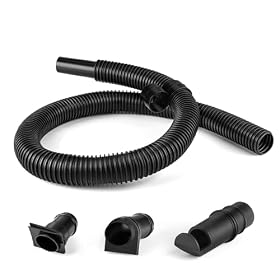 Shop-Vac 9056400 Vacuum Hose Kit, 4 Ft x 1-1/4 Inch with 3 AdaptersShop-Vac
$19.95 as of
View on Amazon Shop-Vac 9056500 Hose w/Curved End, 1-1/4 in. Diameter x 8 ft. Length, Long Reach, Black,…Shop-Vac
$39.36 as of
View on Amazon
Product prices and availability are accurate as of the date/time indicated and are subject to change. Any price and availability information displayed on Amazon.com at the time of purchase will apply to the purchase of this product.
How to choose the right diameter
Start with the vacuum inlet
Look at the vacuum’s inlet, the owner’s manual, or the original hose. The replacement hose should match the machine’s supported hose size or connect through an adapter specifically made for that model or fitting system.
If you no longer have the original hose, measure the connection with a ruler or tape measure. Measure at the point where the hose actually seats, and compare the result with the replacement hose’s listed inside and outside diameters. A hose that appears close in size may still be too loose, too tight, or unable to lock in place.
Match the hose to the debris
Use the smallest hose that reliably handles the material you need to collect, but avoid reducing the diameter unnecessarily:
- Fine dust and small particles: a compact hose may be convenient if the filter and dust collection setup are appropriate.
- General workshop debris: a medium or full-size hose is usually more versatile.
- Wood chips, larger debris, and water: a larger hose is less prone to restriction from bulky material.
A smaller hose can make a tool feel easier to control, but it may reduce the amount of air the system can move. A larger hose can support higher-volume collection, but it may be heavier and harder to use with small attachments.
Consider hose length
Longer hoses add resistance, especially when they are narrow, kinked, or partially blocked. If you need extra reach, use a hose size approved for the vacuum rather than adding multiple small reducers or improvised extensions.
Keep the hose as straight as practical. Avoid sharp bends, crushed sections, and tight coils while the vacuum is running.
Full-size replacement hose
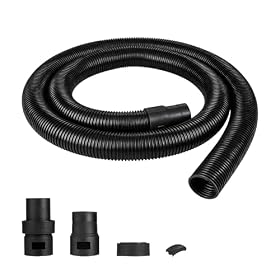 Shop-Vac 9050333 Vacuum Hose for Standard or Locking Inlets, 8-Foot x 2.5 Inch Diameter, Prevents…Shop-Vac
$29.99 as of
View on Amazon Shop-Vac 8' X 2-1/2" Universal Hose BlackShop-Vac
$39.98 as of
View on Amazon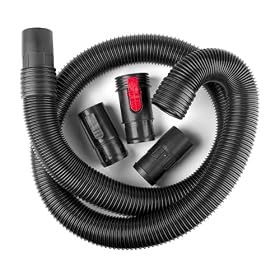 WORKSHOP Wet/Dry Vacs WS25020A 2-1/2-in. x 7-ft. Locking Shop Vacuum HoseWORKSHOP Wet/Dry Vacs
$27.16 as of
View on Amazon
Product prices and availability are accurate as of the date/time indicated and are subject to change. Any price and availability information displayed on Amazon.com at the time of purchase will apply to the purchase of this product.
Hose diameter is not the same as fitting compatibility
Two hoses with the same advertised diameter may still use different cuffs, locking collars, threads, or friction-fit connections. Before ordering, confirm:
- The hose’s inside diameter and outside diameter.
- The diameter and shape of the vacuum inlet.
- Whether the connection is a friction fit, twist lock, threaded fitting, or proprietary coupling.
- Whether the hose includes cuffs or adapters.
- Whether your attachments fit the hose directly or require a separate adapter.
For power tools, also check the tool’s dust port. A shop vac hose may fit the vacuum but not the tool, or it may require a stepped adapter.
Hose-to-tool connection adapter
 Shop Vac 90687 Universal Tool Adapter, 2PCSShop-Vac
$14.99 as of
View on Amazon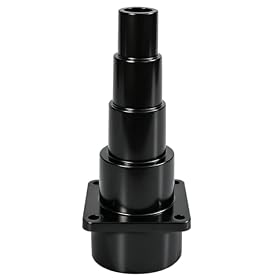 Universal Tool Adapter Attachment for Shop Vac Wet/Dry Vacuum Connects to Power Tools 2-1/2" Integrated…Happy Tree
$11.38 as of
View on Amazon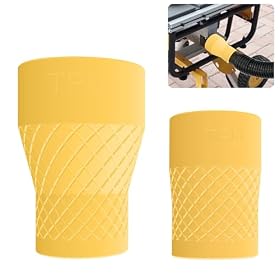 TPU Flexible Material Miter Saw Vacuum Adapter, Universal Quick Connect Dust Hose Compatible with Miter…Generic
$13.99 as of
View on Amazon
Product prices and availability are accurate as of the date/time indicated and are subject to change. Any price and availability information displayed on Amazon.com at the time of purchase will apply to the purchase of this product.
When a smaller hose or adapter makes sense
A reducer can be useful when connecting a large shop vac hose to a narrow tool port or detail-cleaning attachment. Use a purpose-made adapter that fits securely and does not collapse under suction.
Avoid stacking several reducers when possible. Each transition can add restriction and create places where dust or debris catches. If the connection leaks, suction drops and fine dust may escape rather than entering the hose.
For a tool that produces fine dust, a tight connection and suitable filter are important. A smaller hose alone does not guarantee better dust collection.
Quick compatibility check before buying
- Find the vacuum’s supported hose size in the manual or on the manufacturer’s parts diagram.
- Measure the existing hose cuff or vacuum inlet.
- Identify whether the listed size is nominal, inside diameter, or outside diameter.
- Confirm the replacement hose’s connection style.
- Check the diameter of each attachment or power-tool dust port.
- Verify that any adapter is made for the vacuum and the intended accessory.
Do not force a hose onto a fitting. A loose connection can leak air, while an overly tight connection can damage the inlet or hose cuff.
If the hose fits but suction is poor
Check the hose from the vacuum to the nozzle in this order:
- Remove and inspect the filter. A clogged or incorrectly installed filter can restrict airflow.
- Disconnect the hose and look through it for a blockage, then check the nozzle and wand.
- Inspect the cuffs and connections for air leaks, cracks, or loose adapters.
- Make sure the hose is not kinked, crushed, or sharply bent.
- Check whether the drum or collection bag is full.
- Confirm that the hose is connected to the correct inlet for the type of cleanup.
If the hose is cracked, permanently crushed, or no longer seals at either end, replacing the hose or its cuff is usually more practical than trying to seal it with tape. If a correctly fitted, unobstructed hose still produces weak suction after the filter and collection system are checked, follow the manufacturer’s service instructions. Electrical or motor repairs should be handled by a qualified professional when they exceed basic user maintenance.
FAQ
Is a bigger hose better for a shop vac?
Not always. A larger hose can move bulky debris and support higher-volume airflow, but it is heavier and may be less convenient for detail work. The best size is the one supported by the vacuum and suited to the debris and attachments you use.
Can I use a 2.5-inch hose on a 1.25-inch shop vac?
Only if the vacuum manufacturer provides a compatible adapter and the machine is designed to work with that hose arrangement. A hose cannot be connected securely based on diameter alone, and reducing a large hose to a small inlet may limit performance.
How do I measure a shop vac hose?
Measure the hose and cuff at the connection point, checking both inside and outside diameters. Then compare those measurements with the vacuum manufacturer’s listed hose size and fitting type.
Do all shop vac attachments fit the same hose size?
No. Attachments and power-tool dust ports use different connection sizes and shapes. You may need a compatible adapter, and the adapter should fit tightly without collapsing or leaking.