A replacement shop vac hose only works properly when its diameter, cuffs, connection method, and intended use match the vacuum. Here is how to identify the right fit before buying.
What do you need help with?
Open an answer, or tell us what we should cover next.
Answered in this guide
Choose a replacement shop vac hose that fits
Match the replacement hose to the vacuum’s make and model, inside connection diameter, cuffs, tool end, connection method, and usable length. Checking these details before ordering helps avoid a hose that is loose, blocked, or incompatible.
Measure the hose’s inside diameter, inspect each end separately, and check the usable length. The connection section that enters or locks onto the vacuum matters more than the outside diameter of the corrugated hose.
Use universal hoses and adapters without assuming a fit
Universal hoses and adapters can bridge some differences between vacuum inlets, hose sizes, and tools. They still need compatible connection points at both ends, so “universal” does not guarantee a direct fit for every shop vac.
Requests help us prioritize the next guide. No email required.
One anonymous request per topic.
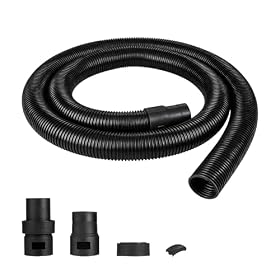
A replacement shop vac hose fits when its inside diameter, end cuffs, connection method, and length match both the vacuum inlet and the tool or attachment you plan to use. Do not rely on the hose’s advertised diameter alone: two hoses with the same nominal size may use different cuffs or locking connections.
Start with the hose you need to replace
Before shopping, identify where the hose connects and what went wrong with the original.
Cracked or collapsed hose: Replace it with a hose of the same diameter and similar length.
Lost or damaged cuff: A replacement cuff or end adapter may be enough.
Hose that keeps pulling loose: Check for a missing locking tab, incorrect cuff, or an adapter that is too loose.
Poor suction after adding a longer hose: A smaller diameter, excessive length, or restrictive attachment may be the cause.
Need to connect power tools: Look for a hose and adapter system designed for the tool’s dust port, not just the vacuum inlet.
If the existing hose is still available, use it as the main reference. Photograph both ends and record the markings printed on the hose before ordering.
Measure for a reliable fit
Measure the hose diameter
Measure the inside diameter of the hose opening, not the outside of the corrugated plastic. If the end has a molded cuff, measure the connection section that actually enters or locks onto the vacuum.
Use calipers if available. Otherwise, measure across the opening with a ruler and compare that measurement with the replacement hose’s stated connection size. Nominal hose sizes are often rounded, so a small difference can be normal—but a large difference usually means the hose will not seal correctly.
Check both ends separately
Many shop vac hoses do not have identical ends. One end may connect to the vacuum inlet while the other connects to a wand, floor nozzle, crevice tool, or power-tool adapter.
Record whether each end is:
A plain friction-fit cuff
A threaded connection
A twist-lock or bayonet-style connection
A latch or tab-style connection
A tapered tool-end adapter
A universal adapter intended to be trimmed or fitted to different ports
A hose can have the right diameter but still fail to connect if the end profile or locking mechanism is different.
Measure the usable length
Replacement hose lengths are typically listed as the hose’s extended or nominal length. A very long hose may be convenient, but it can be harder to store and may reduce airflow, especially when it has a smaller diameter or several bends.
Choose the shortest length that reaches the work area comfortably. Allow extra reach when the vacuum must remain outside a vehicle, workshop, or dusty room, but avoid adding length simply for convenience.
Product prices and availability are accurate as of the date/time indicated and are subject to change. Any price and availability information displayed on Amazon.com at the time of purchase will apply to the purchase of this product.
Match the hose diameter to the job
The right diameter depends on the vacuum inlet, attachments, and material being collected.
Smaller hoses
Smaller hoses are easier to handle and can work well with hand tools, upholstery nozzles, crevice tools, and tight spaces. They may be more convenient for fine cleanup, but they can restrict airflow when used with larger floor nozzles or bulky debris.
Larger hoses
Larger hoses generally provide more room for airflow and are better suited to chips, leaves, coarse debris, and high-volume cleanup. They are also bulkier and may not connect directly to small dust ports on power tools.
Fine dust and power-tool extraction
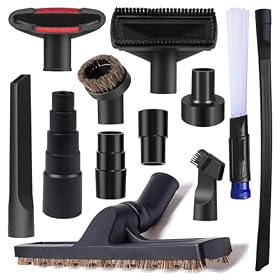
For sanding, routing, or sawing, compatibility involves more than hose diameter. Check the dust port size on the tool, whether an adapter is included, and whether the hose connection seals tightly. Fine dust can escape through loose adapters even when the vacuum itself has adequate suction.
Use the filter and collection setup recommended for the material. A hose cannot compensate for an unsuitable filter or a full collection container.
Product prices and availability are accurate as of the date/time indicated and are subject to change. Any price and availability information displayed on Amazon.com at the time of purchase will apply to the purchase of this product.
Understand universal hoses and adapters
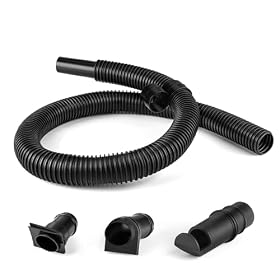
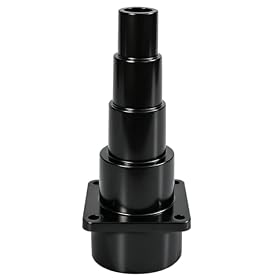
A universal replacement hose may fit several inlet sizes, but “universal” does not mean every connection will be secure without adjustment. These products commonly use a tapered cuff or a stepped adapter.
Before buying, check:
The range of port sizes the adapter supports.
Whether the adapter must be cut to size.
Whether the connection is friction-fit or locking.
Whether a separate tool adapter is required.
Whether the adapter leaves a noticeable gap that could leak air.
If an adapter must be trimmed, remove only small amounts at a time. Test the fit before cutting further. A cut that is too large may require a replacement adapter.
Product prices and availability are accurate as of the date/time indicated and are subject to change. Any price and availability information displayed on Amazon.com at the time of purchase will apply to the purchase of this product.
Replacement hose versus replacement cuff
You may not need a complete hose. A replacement cuff is reasonable when the hose is flexible and undamaged but the end is cracked, missing, or no longer stays attached.
Replace the entire hose when:
The corrugated body has cracks or splits.
The hose collapses during normal use.
The plastic has become brittle.
The hose has a persistent hole or leak.
The connection end is permanently molded into the damaged hose.
The replacement cuff would cost nearly as much as a compatible hose.
A temporary tape repair may help with a minor exterior split, but it is not a dependable long-term seal—especially for fine dust or wet pickup.
Product prices and availability are accurate as of the date/time indicated and are subject to change. Any price and availability information displayed on Amazon.com at the time of purchase will apply to the purchase of this product.
Avoid common compatibility mistakes
Buying by outside diameter
The outside diameter includes the hose wall and corrugations. It may not match the size needed by the vacuum inlet. Compare the actual connection opening and the manufacturer’s compatibility information.
Assuming the same brand guarantees a fit
A manufacturer may use several hose sizes or connection designs across its product range. Match the specific vacuum inlet and hose connection, not only the brand name.
Ignoring the tool end
A hose may fit the vacuum but not the wand or attachment. If you need to use existing accessories, confirm the end connection on both sides before ordering.
Choosing the longest hose available
Extra length adds storage bulk and can reduce practical airflow. It also creates more opportunities for kinks and blockages.
Forgetting wet-use requirements
For wet pickup, the hose and cuffs should be suitable for the vacuum’s wet-dry configuration. Keep electrical connections and power cords away from water, and follow the vacuum manufacturer’s instructions for filter removal or wet-use setup.
Installation and fit checks
After receiving the replacement hose:
Turn the vacuum off and unplug it.
Remove the old hose without forcing or twisting the inlet.
Compare both hoses, including the cuffs and locking features.
Push or twist the new hose fully into place according to the manufacturer’s instructions.
Check that the connection does not wobble or pull free under light hand pressure.
Inspect both ends for gaps, deformities, or an incorrectly seated gasket.
Run the vacuum briefly and listen for air leaks.
Test suction with the intended attachment before beginning a larger cleanup.
Do not use duct tape to force an incompatible connection if the hose can work loose or leave a large leak. A proper cuff or adapter is safer and more reliable.
What to do if the replacement still does not fit
If the diameter appears correct but the hose will not seat, compare the cuff shape and locking tabs. The replacement may be intended for a different inlet design.
If it fits but suction is weak, check for a blocked hose, a clogged filter, a full bag or drum, an open drain, or a poorly sealed adapter. A longer or narrower hose can also reduce airflow.
If the vacuum inlet itself is cracked, distorted, or missing its locking hardware, replacing the hose alone may not solve the problem. Look for a model-specific inlet or replacement part. When the inlet, motor, drum, and electrical components are all worn, replacing the vacuum may be more practical than repairing several incompatible parts.
Quick buying checklist
Before ordering a replacement shop vac hose, confirm:
Vacuum make and exact model, if available
Inside diameter of the vacuum-side connection
Diameter and connection style of the tool or accessory side
Whether each end locks, twists, threads, or friction-fits
Required hose length
Wet-pickup compatibility, if applicable
Included cuffs, adapters, and gaskets
Return policy in case the connection profile does not match
The safest choice is a hose listed for your exact vacuum model. If that is unavailable, match the measured connection sizes and end designs carefully, then choose an adapter made for the specific vacuum inlet and tool port.
FAQ
How do I know what size replacement shop vac hose I need?
Measure the inside diameter of the connection at the vacuum inlet and check the connection on the opposite end. Also compare the cuff shape and locking method, because diameter alone does not guarantee compatibility.
Can I use a different brand hose on my shop vac?
Often, yes, if the diameter, cuff profile, and connection method match. A different-brand hose may require a compatible adapter, and a universal tapered cuff may not provide the same secure fit as a model-specific connection.
Is a longer shop vac hose better?
Not always. A longer hose provides more reach but can be harder to store and may reduce airflow, particularly if it is narrow, kinked, or used with restrictive adapters. Choose enough length for the job without excessive slack.
Why does my replacement shop vac hose fit loosely?
The cuff may be the wrong size or shape, a gasket may be missing, or the connection may require a locking or threaded end rather than a friction fit. Check the exact inlet design and use the correct adapter instead of relying on tape.
Can I replace only the end of a shop vac hose?
Yes, when the hose body is still flexible and undamaged and the end cuff is replaceable. If the hose is cracked, brittle, collapsing, or leaking along its length, replacing the complete hose is usually the better option.