
A dust extractor can replace a shop vac when your main job is collecting fine, dry dust directly from power tools. Its filtration, airflow design, hose size, and tool-activation features are usually better suited to woodworking and concrete dust than a basic shop vacuum. However, a shop vac remains the more versatile choice for wet pickup, larger debris, car cleaning, and general workshop cleanup.
Comparisons · Mon Sep 07
Dust extractor as an alternative to a shop vac
A dust extractor can replace a shop vac for many dry, fine-dust tasks, especially when connected to a power tool. But it is not automatically a better choice for wet pickup, large debris, or general cleanup.
What do you need help with?
Open an answer, or tell us what we should cover next.
Answered in this guide
Choose between a dust extractor and a shop vac
Choose a dust extractor for fine-dust control at power tools, or choose a shop vac for wet pickup, large debris, and varied general cleanup.
Choose the right machine for fine workshop dust
A dust extractor is usually the better choice for sanding, routing, sawing, grinding, and other tasks where fine dust must be captured at the tool.
Choose the right machine for wet pickup and large debris
A shop vac is generally more practical for wet pickup, high-volume debris, broad floor cleanup, and varied attachments, unless the extractor specifically supports those jobs.
Compare the specifications that matter before buying
Focus on filtration, filter maintenance, airflow, suction, hose connections, capacity, bag configuration, and wet-dry capability instead of relying only on motor horsepower.
Need something else?
Request a topic and help us choose what to build next.
Connect automatic tool activation safely
Fix a shop vac that has lost suction
Choose between bagged and bagless shop vacuumsRead this guide →
Requests help us prioritize the next guide. No email required.
One anonymous request per topic.
Dust extractor vs. shop vac
The terms are sometimes used interchangeably, but these machines are designed with different priorities.
| Feature | Dust extractor | Shop vac |
|---|---|---|
| Main purpose | Capture fine dust at the tool | General dry and wet cleanup |
| Filtration | Usually optimized for fine particles | Varies by filter and machine |
| Hose | Often smaller and more flexible for tool ports | Often larger for higher-volume cleanup |
| Tool connection | Commonly includes a power-tool outlet or automatic start | May not include tool activation |
| Debris capacity | Often smaller | Often larger |
| Wet pickup | Frequently unavailable or restricted | Commonly supported, if configured correctly |
| Best use | Saws, sanders, routers, grinders, and dust-producing tools | Floors, vehicles, spills, chips, debris, and mixed cleanup |
These are general design differences, not guarantees for every model. Check the manufacturer's instructions before using either machine with a particular material or tool.
Dedicated fine-dust collection
 ECOMAX Shop Vac, Dust Extractor, 8 Gal 6.5 HP HEPA Vacuum for Power ToolECOMAX
$159.99 as of
View on Amazon Mullet Cyclone Dust Collector, High-Speed Separator for Shop VacMullet
$295.00 as of
View on Amazon 10 Foot Long Dust Collection Power Tool Hose Kit with 8 AttachmentsPeachtree Woodworking Supply
$29.95 as of
View on Amazon
Product prices and availability are accurate as of the date/time indicated and are subject to change. Any price and availability information displayed on Amazon.com at the time of purchase will apply to the purchase of this product.
When a dust extractor is the better alternative
A dust extractor is usually the better choice when dust collection at the tool is the priority.
Fine woodworking dust
Sanding and routing can create large amounts of fine dust that remain airborne or pass through an unsuitable filter. A dust extractor generally makes it easier to use fine filtration and a tool-sized hose close to the point where dust is produced.
For the best results, the extractor still needs a compatible hose, a tight tool connection, and the correct filter or dust bag. A powerful machine with a leaking adapter can collect less dust than a less powerful machine with a sealed connection.
Automatic tool activation
Many dust extractors include an outlet that starts the vacuum when a connected corded tool is switched on. This can make sanding, routing, and sawing more convenient and can reduce the chance of leaving the vacuum running unnecessarily.
Do not exceed the extractor's specified outlet rating. Some cordless tools will not work with automatic-start features unless they are connected through a suitable corded power source or manufacturer-approved accessory.
Fine mineral or construction dust
Concrete, drywall, and masonry dust require more care than ordinary wood chips. A dust extractor with appropriate fine-dust filtration and a compatible pre-separator may be a better fit than a general-purpose shop vac. Follow the filter, bag, and cleaning requirements for the specific material.
For hazardous substances such as lead paint, asbestos, or other regulated dust, do not assume that a consumer dust extractor is adequate. Use the required professional equipment and follow applicable safety rules.
Fine-dust upgrade for a shop vac
 2-Pack VF3500 Replacement Filter for Ridgid 3-4.5 Gal Wet/Dry Shop VacsZILAMGOO
$18.99 as of
View on Amazon JAMHER 6Pack Reusable Wet/Dry Filter VF2002 90107 For Most Vacuum CleanerJAMHER
$7.99 as of
View on Amazon Replacement Filter For Shop Vac 90304 90585 Vacuum 5 Gallon and aboveYH Maialan
$18.99 as of
View on Amazon
Product prices and availability are accurate as of the date/time indicated and are subject to change. Any price and availability information displayed on Amazon.com at the time of purchase will apply to the purchase of this product.
When a shop vac is the better choice
A shop vac is generally more practical when you need one machine for varied cleanup.
Wet pickup
Many shop vacs are designed for wet pickup, while some dust extractors are dry-only or have restrictions on liquids. Before collecting water, remove or change the filter and dust bag exactly as the manual directs. Never use a paper dust bag for wet pickup unless the manufacturer specifically permits it.
Disconnect power before changing filters or converting the machine from dry to wet use. If the vacuum is not clearly rated for liquids, do not use it for spills.
Large debris and high-volume cleanup
A larger hose and drum can make a shop vac more useful for wood chips, leaves, sawdust piles, vehicle interiors, and workshop floors. A dust extractor's smaller hose may clog more easily with bulky debris.
General-purpose attachments
Shop vacs commonly support floor nozzles, crevice tools, utility nozzles, car-cleaning attachments, and blower functions. A dust extractor may accept some of these accessories, but its connections and intended use can be more specialized.
Tool connection for dust collection
 Shop Vac 90687 Universal Tool Adapter, 2PCSShop-Vac
$14.99 as of
View on Amazon Shop-Vac 9068733 Universal Tool Adapter, Customizable Soft Plastic For Connecting Various Accessories, (1-Pack)Shop-Vac
$8.86 as of
View on Amazon 20FT Dust Collection Hose Kit, Wet-Dry Shop Vacuum Hose SystemSelWatty
$44.99 as of
View on Amazon
Product prices and availability are accurate as of the date/time indicated and are subject to change. Any price and availability information displayed on Amazon.com at the time of purchase will apply to the purchase of this product.
What specifications matter most
Filtration and filter maintenance
Look for the filtration level required for the dust you plan to collect, not just the motor's advertised horsepower. Fine-dust work depends on the filter, seals, bags, and cleaning system working together.
A clogged filter reduces airflow. Some extractors use manual or automatic filter cleaning, while shop vacs may rely on filter replacement or manual cleaning. Check whether replacement filters and bags are readily available for the specific machine.
Airflow and suction
Airflow helps move a large volume of debris. Sealed suction helps maintain pull through a hose, tool port, or restriction. Neither number alone tells you how well a vacuum will collect dust from your particular tool.
A narrow hose can improve compatibility with a power-tool dust port, but it may clog more readily with chips. A larger hose can move bulky debris but may not connect directly to a sander or compact saw.
Hose diameter and connection
Measure the tool port and verify the adapter rather than assuming two products will fit. A loose connection allows dust to escape, while an adapter that narrows the passage too much can restrict airflow.
For stationary tools, consider hose length carefully. A longer hose adds convenience but can increase resistance, especially when it has a small internal diameter or several bends.
Capacity and bag configuration
A larger drum means fewer interruptions during general cleanup. Bags make fine-dust disposal cleaner and can protect the filter, but they add an ongoing consumable cost and may reduce usable capacity.
Fine dust can fill a filter or bag faster than its volume suggests. If the machine loses suction quickly, check the filter and bag before assuming the motor is underpowered.
Wet/dry capability
Do not infer wet capability from a machine's appearance. Confirm that the manual specifically permits liquid pickup and follow the required filter and float-shutoff setup. Some models may allow only limited types of liquid or may prohibit certain chemicals entirely.
High-volume chip pre-separation
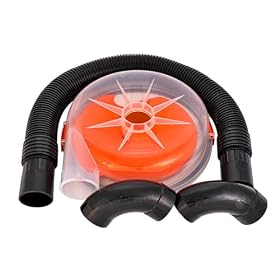 Dustopper PRO Dust Collector - 99.9% Efficiency Cyclone Dust SeparatorDustopper
$66.98 as of
View on Amazon VEVOR Cyclone Dust Separator with Metal Tank, 4" Retrofit Cyclone Separator for Dust Collectors, ABS…VEVOR
$89.91 as of
View on Amazon- Mullet Cyclone Dust Collector, High-Speed Separator for Shop VacMullet
$295.00 as of
View on Amazon
Product prices and availability are accurate as of the date/time indicated and are subject to change. Any price and availability information displayed on Amazon.com at the time of purchase will apply to the purchase of this product.
Can you use a shop vac for fine dust?
Yes, but the result depends on the filter, bag, hose, seals, and tool connection. A shop vac with a suitable fine-dust filter and a sealed dust-collection setup can work well for many workshop tasks. It may still be less convenient than a dust extractor if you need automatic filter cleaning, automatic tool start, or a compact tool hose.
For very fine dust, avoid relying on the standard general-purpose filter supplied with a machine unless the manufacturer says it is suitable. Use the specified fine-dust filter or bag, and avoid operating the vacuum with a missing or damaged filter.
Can you use a dust extractor for normal shop-vac jobs?
Sometimes. A dust extractor can handle dry debris if the hose, filter, and capacity are suitable, but it may be inconvenient for large chips or broad floor cleanup. It may also lack wet-pickup capability, a large drum, or the attachments you already use with a shop vac.
Use the extractor only within its stated applications. Do not collect liquids, hot ash, combustible materials, or chemical residues unless the manufacturer explicitly allows it.
Practical choice guide
Choose a dust extractor if you primarily:
- Connect a vacuum to sanders, routers, saws, or grinders
- Need better control of fine dry dust
- Want automatic tool activation
- Prefer a compact hose and tool-focused accessories
- Are willing to maintain filters and buy compatible bags or parts
Choose a shop vac if you primarily:
- Need wet and dry cleanup
- Collect large chips, dirt, or debris
- Clean vehicles, floors, and work areas
- Want a larger drum and broad attachment compatibility
- Need one general-purpose machine rather than a dedicated dust-collection setup
If you do both types of work regularly, keeping a shop vac for general cleanup and using a dust extractor for fine tool dust may be more practical than forcing one machine to do everything.
Setup tips for better dust collection
- Use the filter and bag specified for the material.
- Check every hose joint and adapter for air leaks.
- Keep the hose as short and straight as practical.
- Empty the drum or replace the bag before it becomes packed.
- Clean or replace the filter when airflow drops.
- Use a pre-separator for high-volume chips when compatible with the vacuum.
- Keep the tool's dust port and internal passages clear.
- Wear appropriate respiratory and eye protection; collection systems do not eliminate airborne exposure.
A dust extractor is not a substitute for safe work practices or required respiratory protection.
When replacement is the sensible next step
Replace a filter, bag, hose, or adapter when the part is damaged, permanently clogged, or no longer seals properly. These are often the most cost-effective fixes for poor collection.
Consider replacing the entire machine when the motor has an electrical fault, the drum or housing is cracked, replacement filters are unavailable, or the machine cannot provide the filtration or wet/dry capability your work requires. Unplug the vacuum before inspection, and have electrical repairs handled by a qualified professional when the fault is not obvious or safely covered by the manual.
FAQ
Is a dust extractor more powerful than a shop vac?
Not necessarily. Dust extractors and shop vacs are optimized for different jobs, and advertised airflow or suction figures are not directly comparable across manufacturers. Tool connection, hose size, filtration, and sealing can matter as much as motor output.
Can I connect a dust extractor to a shop-vac hose?
Possibly, but the hose diameter and end fittings must match or use a suitable adapter. Avoid improvised connections that leak, collapse, or reduce the passage enough to cause frequent clogging.
Is a dust extractor worth it for a sander?
It can be worthwhile if you sand frequently or need better fine-dust control. A compatible hose, sealed tool port, appropriate filter, and regular filter maintenance are necessary for good results.
Can a dust extractor pick up water?
Only if the manufacturer specifically rates that model for wet pickup and provides instructions for the required filter, bag, and float-shutoff setup. Many dust extractors are intended for dry materials only.
Why does my shop vac still leave fine dust behind?
Check the filter type, bag condition, hose and adapter leaks, tool-port fit, and clogged passages. A general-purpose filter may not be suitable for very fine dust, and a full or poorly sealed bag can reduce collection performance.