A shop vac handles general cleanup and occasional tool dust, while a dust extractor is designed for sustained fine-dust collection at power tools. Here is how to choose between them.
A shop vac is the better general-purpose choice for spills, debris, vehicle cleaning, and occasional tool use. A dust extractor is usually the better choice for frequent sanding, sawing, routing, or other work that creates large amounts of fine dust—especially when indoor air quality and tool dust control matter.
The two machines overlap, but they are designed around different priorities. A shop vac emphasizes versatile cleanup and strong overall suction. A dust extractor emphasizes fine-particle filtration, controlled airflow, tool compatibility, and consistent collection while connected to a power tool.
Typically designed around finer dust filtration and filter maintenance
Tool connection
May require adapters
Usually designed for hose and tool connections
Automatic tool switching
Available on some models, not universal
Common on many models, but verify the specifications
Wet pickup
Often supported, with the correct setup
Varies; many are primarily intended for dry dust
Portability
Commonly available in many sizes
Often optimized for moving with or around tools
Cost
Usually lower for comparable general-purpose capacity
Often higher because of filtration and dust-management features
What is a shop vac?
A shop vac, also called a wet-dry vacuum, is a flexible cleanup machine. Depending on the model and configuration, it can collect sawdust, wood chips, dirt, metal debris, and liquids.
Its strengths include:
General-purpose wet and dry cleanup
A wide range of tank sizes
Compatibility with common vacuum hoses and attachments
Useful suction for larger debris
Easy use around garages, workshops, vehicles, and job sites
Lower purchase cost in many cases
A shop vac can collect dust from a power tool, but the result depends on the filter, hose, separator, tool port, and the type of dust being produced. A basic shop vac with a coarse filter may collect larger debris while allowing too much fine dust to pass through or escape during filter cleaning and emptying.
Product prices and availability are accurate as of the date/time indicated and are subject to change. Any price and availability information displayed on Amazon.com at the time of purchase will apply to the purchase of this product.
What is a dust extractor?
A dust extractor is built primarily to capture dust at its source. It connects directly to a tool such as a sander, track saw, circular saw, router, or grinder rather than being used mainly for floor and surface cleanup.
Typical dust-extractor features may include:
Finer filtration intended for airborne dust
Automatic filter-cleaning systems on some models
Variable suction or airflow control
A tool-triggered power outlet on some models
Hose and adapter systems designed for power tools
More secure dust-bag or container arrangements
Construction intended for frequent tool-connected use
Features vary considerably. The word “extractor” alone does not guarantee a particular filter class, certification, or performance level. Check the manufacturer’s specifications when the dust may be hazardous or unusually fine.
Product prices and availability are accurate as of the date/time indicated and are subject to change. Any price and availability information displayed on Amazon.com at the time of purchase will apply to the purchase of this product.
Filtration is the biggest practical difference
For ordinary debris, suction and tank capacity may matter most. For fine dust, filtration becomes a primary safety and cleanup issue.
A suitable filter helps prevent collected dust from being blown back into the room. A disposable dust bag or fleece bag can also reduce exposure when emptying the container and may help preserve airflow as the filter loads.
When comparing machines, check:
The filter type and stated filtration rating
Whether the rating applies to the complete vacuum system or only the filter material
Whether a dust bag is required or recommended
How the filter is cleaned
Whether replacement filters are readily available
Whether the manufacturer approves the machine for the specific dust involved
A high-efficiency filter does not make every machine appropriate for hazardous dust. Concrete, masonry, lead paint, asbestos, and some treated or chemically contaminated materials require specific controls and procedures. Follow the tool, vacuum, and material-safety instructions, and use a qualified professional when the hazard is uncertain.
Product prices and availability are accurate as of the date/time indicated and are subject to change. Any price and availability information displayed on Amazon.com at the time of purchase will apply to the purchase of this product.
Airflow, suction, and hose size
Shop vac and dust-extractor specifications can be difficult to compare because manufacturers may emphasize different measurements. Airflow describes how much air the machine moves, while sealed suction describes how strongly it can pull against resistance. Neither number alone predicts how well it will collect dust from a particular tool.
The hose also matters. A wider hose can move more air and is useful for chips and general debris. A smaller hose may fit power-tool ports better and can maintain useful velocity near a tool opening, but it may clog more easily with large chips.
For tool dust collection, prioritize:
A hose that fits the tool securely.
A diameter suited to the dust and chips being produced.
Adequate airflow under hose and filter resistance.
A short, smooth hose path when practical.
A tool port that does not obstruct the connection.
Do not assume that a larger motor automatically means better dust collection. A poorly sealed hose, overloaded filter, or unsuitable adapter can reduce collection substantially.
Product prices and availability are accurate as of the date/time indicated and are subject to change. Any price and availability information displayed on Amazon.com at the time of purchase will apply to the purchase of this product.
Which one is better for woodworking?
For occasional cutting or drilling, a shop vac with the correct fine-dust filter, bag, and adapter may be sufficient. It is a practical choice if the same machine also needs to handle spills, floor debris, and vehicle cleaning.
For regular woodworking, a dust extractor is usually more convenient and predictable. Its tool connections, filtration system, and automatic switching can reduce setup time and help capture dust before it spreads.
A shop vac is more likely to make sense when:
You use power tools only occasionally.
You also need wet pickup.
Your work produces a mix of chips and general debris.
You want one machine for the garage and workshop.
You are willing to select the right filter, bag, hose, and adapter.
A dust extractor is more likely to make sense when:
You sand, cut, or route frequently.
Fine dust control is a priority.
You work indoors or in a finished space.
You want automatic tool activation.
You need a purpose-designed tool hose and accessory system.
Which one is better for concrete or masonry dust?
Concrete and masonry dust are extremely fine and can quickly load an unsuitable filter. A general shop vac should not be treated as automatically adequate for this work.
Look for a vacuum specifically approved by its manufacturer for the dust and application. Follow required filter, bag, pre-separator, and personal-protection instructions. Some jobs may require a particular dust-class designation or other compliance features; verify the applicable requirements rather than relying on a generic “fine dust” label.
A pre-separator can reduce the amount of material reaching the vacuum filter, but it does not replace the required final filtration or safe handling procedure.
Wet pickup changes the decision
Many shop vacs are designed for wet pickup, but the machine must be configured correctly. This may mean removing a paper or dry-only dust bag, using the approved wet filter arrangement, and emptying the tank before it becomes overfilled.
Do not assume that a dust extractor can safely collect liquids. Some models are dry-only, while others support wet pickup with specific accessories or procedures. Check the manual before collecting water, slurry, or other liquids.
If you regularly switch between wet cleanup and fine dry dust, a wet-dry shop vac may be more convenient. If fine dust collection is the main task, a dedicated extractor may provide better day-to-day control.
Important features to compare
Automatic tool switching
An automatic tool outlet can start the vacuum when the connected power tool runs and keep it running briefly afterward. This is convenient and may reduce the amount of dust left in the hose.
Check the outlet’s electrical limits and use it only with equipment the manufacturer permits. Do not connect a tool or accessory that exceeds the stated rating.
Filter cleaning
Filter-cleaning systems help restore airflow when fine dust begins restricting the filter. Manual, semi-automatic, and automatic systems operate differently. A filter-cleaning feature does not eliminate the need to inspect and replace filters.
Dust bags and containers
Bags can make disposal cleaner and help keep the filter from loading as quickly. They also reduce usable container capacity and add an ongoing consumable cost. For wet pickup, the bag may need to be removed.
Hose and adapter compatibility
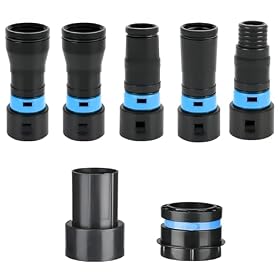
Power-tool dust ports are not fully standardized. Confirm the hose diameter, adapter style, and connection method before buying. A loose connection can leak dust even when the vacuum itself has good filtration.
Portability
Look for wheel quality, handle design, hose storage, cord storage, and overall height. A machine that is technically capable but difficult to move may get used less consistently.
Can you upgrade a shop vac for dust extraction?
Often, yes. A shop vac can become more effective for tool dust collection with a compatible fine-dust filter, dust bag, suitable hose, tool adapter, and sometimes a cyclone-style pre-separator.
These upgrades can improve collection, reduce filter loading, and make disposal easier. They do not necessarily give the machine the same filtration controls, airflow behavior, tool switching, or certifications as a dedicated dust extractor.
Upgrade a shop vac when you need occasional tool collection and already own a suitable machine. Choose a dust extractor instead when fine dust collection is a frequent, central part of the work.
A practical buying decision
Choose a shop vac if you want one flexible machine for wet pickup, general debris, vehicle cleaning, and occasional power-tool dust. Budget for the correct filter, bag, hose, and adapter rather than relying on the machine’s included general-purpose setup.
Choose a dust extractor if you regularly connect to power tools, work with fine dust indoors, need more controlled filtration, or value automatic tool switching and purpose-designed accessories.
If you are uncertain, identify the material first. Ordinary wood chips and garage debris allow more flexibility. Fine sanding dust, masonry dust, hazardous coatings, and other potentially harmful materials require closer attention to filtration, approved use, disposal, and protective equipment.
FAQ
Can a shop vac replace a dust extractor?
Sometimes, for occasional woodworking and general cleanup. Use the correct fine-dust filter, bag, hose, and tool adapter. A dedicated dust extractor is usually the better choice for frequent fine-dust collection or work requiring specific filtration and compliance features.
Is a dust extractor stronger than a shop vac?
Not necessarily. Performance depends on airflow, suction under resistance, hose size, filter condition, tool port design, and sealing. Dust extractors are optimized for tool dust collection, while shop vacs are optimized for broader cleanup tasks.
Can I use a dust extractor for wet pickup?
Only if the specific model is designed and configured for wet pickup. Check the manual before collecting liquids, because some dust extractors are dry-only or require different filters and accessories.
Do I need a dust extractor for a sander?
For occasional sanding, a properly configured shop vac may be adequate. For frequent sanding, indoor work, or fine dust where air quality matters, a dust extractor with suitable filtration and a secure tool connection is generally the better choice.
Does a HEPA filter make a shop vac a dust extractor?
No. A HEPA or high-efficiency filter can improve filtration, but a dust extractor is a complete system that may also include tool-focused airflow, hose connections, filter cleaning, bags, and electrical controls. Verify the manufacturer’s stated application and certification.