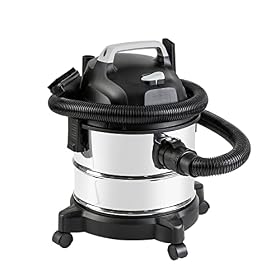
A good workshop shop vac should match your tools, debris, and available storage space. For general cleanup, prioritize a durable tank, useful hose diameter, washable filtration, and easy-to-find replacement parts. If you plan to connect the vacuum to a table saw, sander, router, or other dust-producing tool, filtration and dust-collection performance matter more than a large tank or an impressive peak-horsepower number.
What to look for in a workshop shop vac
Airflow and suction
Shop vac specifications commonly include airflow, measured in CFM, and sealed suction or water lift. CFM indicates how much air the vacuum can move, while water lift indicates how strongly it can pull against resistance. Neither number alone tells the whole story.
For loose chips, sawdust, and general floor cleanup, strong airflow is useful. For a long hose, narrow tool port, or clogged filter, higher suction helps maintain pickup. A vacuum with a balanced combination of both is generally more useful than one advertised only with a high peak horsepower figure.
Peak horsepower is not a reliable way to compare workshop vacuums across brands. Look for published airflow, suction, hose size, filtration details, and accessory compatibility instead.
Hose diameter and tool compatibility
A larger hose generally moves bulky wood chips more effectively and is less likely to clog. A smaller hose is easier to handle and may connect directly to sanders, routers, and other portable tools.
Before buying, check:
- The hose diameter and length
- Included adapters or reducers
- Whether your power tools use a compatible dust port
- Whether replacement hoses and cuffs are available
- Whether the hose is flexible enough for bench or floor work
A hose that is too narrow for the debris can restrict airflow. A hose that is too large for a tool port may require an adapter that reduces performance or fits loosely.
Filtration for fine workshop dust
Fine sanding dust and drywall dust can quickly load a standard filter. As the filter loads, airflow and pickup usually decline. Choose a filter designed for the material you expect to collect, and follow the vacuum manufacturer's instructions for installation and cleaning.
For woodworking, a cartridge filter with a fine-dust rating is generally more suitable than a basic foam filter alone. A disposable collection bag can help contain fine dust and reduce the amount that reaches the filter, but it must be compatible with the vacuum and installed correctly.
A shop vac is not automatically a complete dust-extraction system. Fine wood dust can remain airborne even when the floor looks clean. Use the tool manufacturer's dust-collection guidance, provide ventilation where appropriate, and wear suitable respiratory protection when conditions require it.
Tank capacity
A larger tank means fewer emptying stops, which is useful for floor cleanup, planing debris, or wet pickup. It also adds weight and takes up more storage space.
A compact tank is often easier to carry around a workbench and may be sufficient for portable power tools. For a dedicated shop cleanup vacuum, a larger tank can be more convenient. Capacity should follow the job rather than be treated as a quality rating.
Wet and dry pickup
Most workshop shop vacuums can collect both dry debris and liquids, but the filter setup may differ. Follow the manual before switching from dry to wet pickup. Some models require removing a paper or cartridge filter, while others use a specific foam sleeve or wet-pickup configuration.
Never store a wet vacuum with standing water inside the tank. Empty it promptly, rinse or wipe the tank as directed, and allow components to dry to reduce odors, corrosion, and mildew.
Noise and controls
Shop vacuums can be loud enough to make hearing protection appropriate, especially in an enclosed workshop. A quieter design may be more comfortable for frequent cleanup, but noise specifications are not always measured under identical conditions.
Useful controls may include a sealed power switch, a long power cord, an automatic tool-activation outlet, or a remote switch. Automatic tool activation can be convenient when the vacuum is connected to a power tool, but verify the outlet's electrical limits and use it only as directed by the manufacturer.
Durability and maintenance
For regular workshop use, look for a tank that is easy to empty, sturdy casters or feet, a protected power switch, and hose storage that does not kink the hose. Replacement filters, bags, hoses, and motor components should be reasonably easy to obtain.
A vacuum with a simpler design may be preferable if it is easier to maintain. Features such as onboard storage and a drain port are useful only if they suit your workspace and cleanup routine.