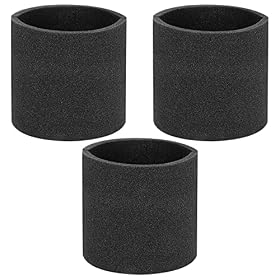
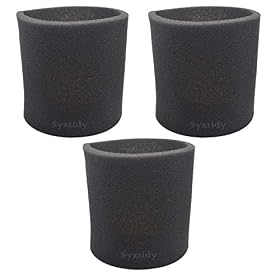
A foam sleeve is generally for wet pickup, while a cartridge filter is generally for dry debris. The correct choice depends on your shop vacuum’s instructions and the material you are collecting.
Foam sleeve versus cartridge shop vac filter
A foam sleeve is generally used for wet pickup, while a cartridge filter is generally used for dry debris. A cartridge filter is the better choice for ordinary dust, dirt, and sawdust when it is compatible with your vacuum. A foam sleeve is intended to protect the vacuum during liquid pickup without becoming saturated like a paper-based dry filter.
Do not choose by appearance alone. Shop vac filter systems vary, and some models require a specific filter, retainer, cage, or adapter. Check the vacuum manual before using either filter, especially for wet pickup or fine dust.
Foam sleeve: best for liquid pickup
A foam sleeve fits over the filter cage or motor intake area on many wet-dry vacuums. Its main purpose is to keep splashing water and larger debris away from the motor area during wet pickup.
Advantages of a foam sleeve
Designed for collecting water and other approved liquids
Does not absorb liquid in the same way as a dry paper filter
Can often be rinsed and reused if the manufacturer permits it
Useful for spills, flooded areas, clogged drains, and wet floor cleanup
Limitations of a foam sleeve
Usually does not provide the same fine-dust filtration as a cartridge filter
Is not a substitute for a high-efficiency or fine-dust cartridge
May restrict airflow if coated with sludge or debris
Must be dried and maintained according to the manufacturer’s instructions
Never assume a foam sleeve is suitable for chemicals, solvents, oils, or flammable liquids. Use the vacuum only for materials listed in its instructions.
Cartridge filter: best for dry debris
A cartridge filter is a pleated filter that fits over the vacuum’s filter cage. The pleats create more filtering surface in a compact space, making cartridge filters useful for dry dirt, household debris, wood dust, and general workshop cleanup.
Advantages of a cartridge filter
Better suited to dry pickup than a foam sleeve
Usually provides more effective dust filtration
Available in standard, washable, and fine-dust versions, depending on the vacuum system
Can preserve airflow when cleaned or replaced at the proper interval
Limitations of a cartridge filter
A standard cartridge can become clogged quickly with very fine dust
Many cartridge filters should not be used for wet pickup
Washing a non-washable filter can damage the media
A visibly clean filter may still be loaded with fine particles inside its pleats
A cartridge labeled for fine dust may be preferable for drywall dust, concrete dust, ash, or very fine sanding debris, but the label must match the material and the vacuum manufacturer’s guidance. For hazardous dust, use the required dust-control equipment rather than relying on a general-purpose shop-vac filter.
Product prices and availability are accurate as of the date/time indicated and are subject to change. Any price and availability information displayed on Amazon.com at the time of purchase will apply to the purchase of this product.
Foam sleeve versus cartridge filter
Consideration
Foam sleeve
Cartridge filter
Main use
Wet pickup
Dry pickup
Liquid handling
Generally intended for approved liquids
Often must be removed for wet pickup unless specifically rated for it
Fine-dust filtration
Limited compared with a fine-dust cartridge
Usually better, depending on filter grade
Cleaning
Often rinseable, if approved
May be washable or non-washable; follow the label
Best choice for sawdust
Usually no
Yes, with the correct dry filter
Best choice for spilled water
Usually yes
Only if the vacuum specifically permits it
The most important distinction is not which filter is “better.” It is whether the filter is designed for the job. Using the wrong filter can reduce airflow, damage the filter, send dust into the motor, or create an electrical and shock hazard during wet pickup.
Product prices and availability are accurate as of the date/time indicated and are subject to change. Any price and availability information displayed on Amazon.com at the time of purchase will apply to the purchase of this product.
Which filter should you use?
For water and wet debris
Use the foam sleeve or other wet-pickup filter specified for your vacuum. Remove the dry cartridge only when the manufacturer says to do so. Some vacuums use a foam filter for wet pickup, while others use a different filter arrangement.
Unplug the vacuum before changing filters. Empty the drum when it reaches the marked fill level, and never let liquid reach electrical components or the motor assembly.
For ordinary dry dirt and debris
Use the compatible cartridge filter. Make sure it is seated evenly and held in place by the correct retainer. A loose or incorrectly installed filter can allow dust to bypass the filter.
For fine dust
Choose a cartridge specifically rated for fine dust if your vacuum supports one. Keep in mind that filter choice is only part of dust control. Use the correct hose, dust-producing tool attachment, ventilation, and personal protective equipment for the material involved.
For drywall, masonry, or ash
Use only a filter and vacuum configuration approved for that material. Fine mineral dust can load a general-purpose filter rapidly, while warm or recently collected ash can create a fire hazard. Do not vacuum hot ash, embers, or unknown powders with a standard shop vacuum.
Product prices and availability are accurate as of the date/time indicated and are subject to change. Any price and availability information displayed on Amazon.com at the time of purchase will apply to the purchase of this product.
How to change from a cartridge to a foam sleeve
Turn off and unplug the vacuum.
Open the drum and confirm it is empty or prepared for the type of pickup you will perform.
Remove the retaining nut, band, or cage component according to the manual.
Remove the cartridge without tearing it or releasing a cloud of dust.
Inspect the filter cage, gasket, and retaining hardware.
Install the foam sleeve evenly over the intended cage or intake area.
Reinstall the retainer and confirm that the sleeve cannot slip into the motor area.
Close the drum securely before reconnecting power.
Reverse the process when returning to dry pickup. Do not install both filters together unless the manufacturer specifically calls for that configuration; extra layers can restrict airflow and overload the motor.
Cleaning and replacement guidance
Shake or brush a dry cartridge outdoors only when the manufacturer permits it. Avoid compressed air unless the instructions allow it, because high-pressure air can damage filter media and spread hazardous dust. Wash a cartridge only if it is labeled washable. Let a washable filter dry completely before reinstalling it.
Rinse a foam sleeve only as directed. Inspect it for tears, hardening, embedded debris, or poor fit. Replace it if it no longer seals or has become permanently clogged.
Replace either filter when cleaning no longer restores airflow, the material is damaged, dust is appearing on the clean side, or the filter cannot be installed securely. Use the vacuum’s required dimensions and attachment method rather than buying a filter based only on drum size or brand name.
Common problems after changing filters
The vacuum has weak suction
Check that the filter is the correct type, fully seated, and not overfilled with dust. Then inspect the hose, wand, nozzle, and drum inlet for a blockage. A foam sleeve covered in sludge or a cartridge packed with fine dust can sharply reduce airflow.
Dust is blowing from the exhaust
Turn the vacuum off and unplug it. Check for a torn filter, missing retainer, damaged gasket, or filter installed on the wrong side of the cage. If dust reached the motor area, clean the vacuum according to the instructions and replace damaged parts before using it again.
The filter will not fit
Do not force it. Filter dimensions and retaining systems are not universal, even among vacuums with similar drum capacities. Verify the exact vacuum series, filter shape, cage design, and retainer before ordering a replacement.
The vacuum sounds strained
Stop using it and inspect the filter and hose for restrictions. If airflow remains poor with a correctly installed, clean filter and unobstructed hose, the issue may involve a damaged seal, switch, cord, or motor. Electrical repairs should follow the manufacturer’s service instructions or be handled by a qualified professional.
Bottom line
Choose a foam sleeve for manufacturer-approved wet pickup and a cartridge filter for dry debris. For sawdust and fine particles, select the appropriate dry or fine-dust cartridge. Before switching filter types, confirm the instructions for your exact vacuum, use the correct retainer and seal, and never use a filter configuration that the manufacturer does not approve.
FAQ
Can I use a foam sleeve for dry vacuuming?
Usually, a foam sleeve is intended for wet pickup and does not provide the fine-dust filtration of a dry cartridge. Use it for dry debris only if the vacuum manufacturer specifically approves that configuration.
Do I remove the cartridge filter when using a foam sleeve?
Often, yes, but the correct setup varies. Some wet-dry vacuums require the cartridge to be removed for liquid pickup, while others use a different approved arrangement. Follow the manual for the exact vacuum.
Can I use a cartridge filter to pick up water?
Do not assume that you can. Many standard cartridge filters are for dry pickup only. Use the wet-pickup filter or configuration specified by the manufacturer.
Is a foam sleeve better than a cartridge filter?
Neither is universally better. A foam sleeve is generally the appropriate choice for approved wet pickup, while a cartridge is generally better for dry debris and dust. The correct filter depends on the material and the vacuum’s design.
How do I know which replacement filter fits my shop vacuum?
Match the replacement to the exact vacuum model or series, filter dimensions, cage shape, retaining hardware, and intended use. Do not rely only on drum capacity or a generic product description.