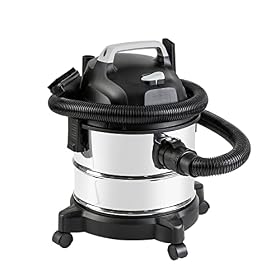
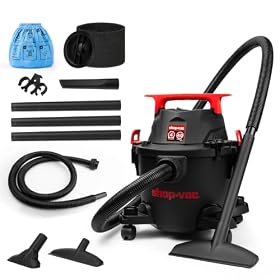
A 4-gallon shop vac is usually the better choice for portability and small cleanup jobs, while a 6-gallon model offers more debris capacity and fewer interruptions. The right choice depends on your typical messes, storage space, hose setup, and whether the manufacturer lists similar airflow and sealed suction.
4 gallon versus 6 gallon shop vac
A 4-gallon shop vac is usually the better choice when portability and compact storage matter most. A 6-gallon shop vac is more convenient for larger messes because it can hold more debris or water before you need to stop and empty it. Neither size automatically has stronger suction, so compare the motor, airflow, sealed suction, hose diameter, filtration, and included attachments—not just the gallon number.
What the gallon rating means
The gallon figure describes the approximate tank capacity, primarily for wet pickup. It does not tell you how much suction the vacuum produces or how much dry debris you can safely collect before the filter or tank needs attention.
Actual usable capacity is affected by several factors:
Float shutoff: During wet pickup, the float can close the airflow before the tank is completely full.
Filter and bag requirements: Dry debris takes up space, and some materials may require a collection bag or a particular filter.
Debris density: A tank filled with sawdust behaves differently from one filled with heavier rubble or water.
Manufacturer limits: The manual may specify a maximum fill line, filter setup, or cleanup procedure.
Treat 4 gallons and 6 gallons as general size categories rather than direct performance ratings.
4-gallon shop vac: best for portability and smaller jobs
A 4-gallon model makes sense for routine cleanup in a garage, workshop, vehicle, utility room, or small renovation area. Its smaller tank is often easier to carry, position, and store, especially when you need to move the vacuum up stairs or around furniture.
Advantages
Easier to lift and transport
Takes up less floor and shelf space
A practical size for vehicle interiors and small work areas
Usually less cumbersome when using short hoses or handheld attachments
Often sufficient for small spills, sawdust, dirt, and occasional wet pickup
Tradeoffs
Fills sooner during large cleanup jobs
May require more frequent emptying when collecting bulky dry debris
Can be less convenient for extended renovation or workshop cleanup
Compact designs may have less room for hose and accessory storage
Choose 4 gallons when you value maneuverability more than maximum capacity and your typical cleanup does not produce a large volume of material at once.
Product prices and availability are accurate as of the date/time indicated and are subject to change. Any price and availability information displayed on Amazon.com at the time of purchase will apply to the purchase of this product.
6-gallon shop vac: best for fewer interruptions
A 6-gallon model is a better fit for larger messes, frequent workshop use, renovation cleanup, or situations where stopping to empty the tank is inconvenient. The extra capacity can be useful for collecting water or bulky dry debris, provided the filter and fill limits are followed.
Advantages
Holds more material before emptying
Better suited to longer cleanup sessions
More practical for larger spills and renovation debris
May provide additional room for storing accessories, depending on the design
Tradeoffs
Can be heavier or more awkward to carry when full
Requires more storage space
A larger tank does not guarantee stronger suction
A bigger container can be unnecessary for quick spot cleaning
Choose 6 gallons when capacity and work time matter more than the smallest possible footprint.
Product prices and availability are accurate as of the date/time indicated and are subject to change. Any price and availability information displayed on Amazon.com at the time of purchase will apply to the purchase of this product.
4 gallons versus 6 gallons: side-by-side decision
Factor
4-gallon shop vac
6-gallon shop vac
Portability
Usually easier to carry and reposition
May be less convenient when moved frequently
Storage
Better for tight spaces
Needs more room
Small spills
Well suited
Also suitable, but may be more machine than needed
Vehicle cleaning
Often convenient
Useful if you also handle larger household or workshop jobs
Large debris loads
Fills sooner
More capacity before emptying
Extended cleanup
More interruptions may be needed
Usually more convenient
Suction
Depends on the motor and airflow specifications
Depends on the motor and airflow specifications
Wet pickup
Capacity is limited by the float and fill guidance
Provides more tank capacity, but still follows the same safety limits
The best size is the one that matches your most common job, not the largest tank you can fit in your budget or storage area.
Product prices and availability are accurate as of the date/time indicated and are subject to change. Any price and availability information displayed on Amazon.com at the time of purchase will apply to the purchase of this product.
Does a 6-gallon shop vac have more suction?
Not necessarily. Tank capacity and suction performance are different specifications. A smaller shop vac can have stronger airflow or sealed suction than a larger model, while two models with similar tank sizes can perform differently.
When comparing specific vacuums, check:
Airflow: Often listed in cubic feet per minute, or CFM. This helps indicate how much air the vacuum moves.
Sealed suction: Sometimes listed as water lift or sealed pressure. This indicates the vacuum's ability to pull against resistance.
Hose diameter: A wider hose can help move larger debris and may reduce clogging, while a smaller hose can be easier to handle.
Filter design: A clogged or unsuitable filter can reduce performance regardless of tank size.
Powerhead and attachment design: The nozzle, hose, and wand can affect practical pickup performance.
Do not assume that a higher advertised horsepower number alone will tell you which vacuum cleans better. Compare the manufacturer's published specifications and make sure they are measured consistently.
Which size is better for wet pickup?
Both sizes can work for wet pickup if the vacuum is designed for it and the manual permits the intended use. A 6-gallon tank gives you more room before emptying, but it can also become heavier and harder to carry once filled with water.
For either size:
Remove any dry-only paper filter or collection bag if the manual requires it.
Install the filter or configuration specified for wet pickup.
Watch for the float shutoff or a change in motor sound.
Stop immediately if the vacuum shuts off airflow or reaches the stated fill limit.
Unplug the vacuum before emptying or changing its configuration.
Allow the tank and filter components to dry as directed before storing or returning to dry pickup.
Never use a wet-dry vacuum to collect liquids that the manufacturer excludes, and avoid hazardous, flammable, or chemically contaminated liquids unless the equipment is specifically rated for them.
Which size is better for sawdust and workshop debris?
For occasional sawdust and small amounts of workshop debris, a 4-gallon model may be sufficient. A 6-gallon model is more convenient when you routinely collect larger volumes or want to empty the tank less often.
Fine dust is a filtration issue as much as a capacity issue. Use the correct filter, bag, and dust-collection setup for the material. Fine dust can load a filter quickly, reducing airflow before the tank is full. For hazardous materials such as lead paint dust, silica dust, or asbestos-containing material, use equipment and procedures specifically approved for that hazard rather than relying on an ordinary shop vacuum.
What to check before choosing between them
Measure storage and working space
Check the vacuum's listed height, width, depth, cord length, hose length, and accessory storage. A tank-size label does not reveal the complete footprint. Also consider whether you will carry the vacuum, roll it, or leave it in one location.
Compare the hose and attachments
A useful hose and nozzle setup can matter more than a small difference in tank size. Look for compatibility with the tools you already own, including floor nozzles, crevice tools, utility nozzles, extension wands, and dust-collection adapters.
Consider emptying and cleaning
A larger tank may reduce interruptions, but it can be more unpleasant to empty when full of wet material or heavy debris. Check whether the tank drains easily, whether the filter is simple to remove, and whether replacement filters and bags are available for that model.
Check the electrical requirements
Compare cord length, outlet requirements, switch design, and any manufacturer guidance about extension cords or tool-actuated outlets. Do not overload a circuit, use damaged cords, or modify the vacuum's electrical components. Follow the manual and consult a qualified professional for unsafe or uncertain wiring situations.
A general-purpose vacuum that can handle both small and moderately larger jobs
A unit that will usually remain on the floor or roll on its casters
If your work involves continuous heavy debris collection, large water removal, or frequent tool-based dust extraction, the more important question may be whether you need a substantially larger tank, a dedicated dust extractor, a pump-out feature, or a filtration system designed for the material.
Bottom line
Pick the 4-gallon size for easier handling, compact storage, and smaller cleanup jobs. Pick the 6-gallon size when you regularly collect more material or want fewer interruptions. Compare airflow, sealed suction, hose diameter, filtration, attachments, dimensions, and replacement-part availability before assuming the larger tank is the better vacuum.
FAQ
Is a 4-gallon shop vac big enough for a garage?
It can be, especially for vehicle cleaning, small spills, light sawdust, and routine dust or dirt. Choose a 6-gallon model if the garage is also a workshop or you regularly collect large amounts of debris.
Is a 6-gallon shop vac too big for car detailing?
Not necessarily. It can work well if you have enough storage and do not mind moving a larger machine. A 4-gallon model is often more convenient for frequent vehicle cleaning because it is easier to position around doors and seats.
Can a 4-gallon or 6-gallon shop vac pick up water?
Many wet-dry vacuums can pick up water, but you must follow the model's instructions for filters, bags, fill limits, and float shutoff operation. Unplug the vacuum before changing its setup, and do not collect liquids the manufacturer excludes.
Does a bigger shop vac always have stronger suction?
No. Gallon capacity describes the tank size, not suction performance. Compare the manufacturer's airflow, sealed suction, hose, filter, and attachment specifications.
When should I choose a larger shop vac than 6 gallons?
Consider a larger wet-dry vacuum, pump-out model, or dedicated dust extractor when you regularly handle high debris volumes, extended wet pickup, or continuous tool-based dust collection. The correct choice depends on the material and the manufacturer's approved use.