
A shop vac’s grounded power cord may protect against electrical faults, but it usually does not ground a plastic hose. To reduce static shocks, use a manufacturer-compatible anti-static hose or grounding kit and install it exactly as directed. Don’t attach wire to the power cord, outlet, or an improvised ground point.
Setup & Use · Mon Sep 14
How to ground a shop vac for less static
A shop vac’s grounded power cord does not necessarily dissipate static from a plastic hose. Use a compatible anti-static hose or approved grounding kit, and never improvise a connection to household wiring.
Why shop vacs build up static
Air and dry debris moving through a hose can build up an electrical charge. Plastic hoses are insulators, so that charge may remain on the hose or discharge as a small shock when you touch it. A grounded plug alone does not provide a path for charge on a plastic hose to dissipate.
Static is more noticeable in dry conditions and when vacuuming fine, dry material. A static shock is different from a fault that causes a sustained tingle or shock from the vacuum’s body. If the vacuum itself gives you a shock, stop using it, unplug it, and have it checked before use.
Reduce static with a compatible hose
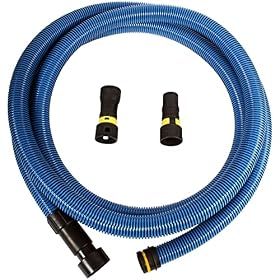 Cen-Tec Systems 94434 16 Ft. Antistatic Wet/Dry Vacuum Hose for Shop Vacs with Universal Power…Cen-Tec Systems
$95.44 as of
View on Amazon Cen-Tec Systems 95204 10 Ft. Antistatic Vacuum Hose for Shop Vacs with Expanded Multi-Brand Power…Cen-Tec Systems
$80.20 as of
View on Amazon 95193 Antistatic Vacuum Hose, 1/4 Inch x 16 Ft Shop Vac Hose ExtensionCONGKAILU
$42.99 as of
View on Amazon
Product prices and availability are accurate as of the date/time indicated and are subject to change. Any price and availability information displayed on Amazon.com at the time of purchase will apply to the purchase of this product.
Use a compatible anti-static hose or grounding kit
- Check the manual and hose compatibility. Look for the manufacturer’s guidance on static-control hoses or grounding kits. Hose diameter, fittings, and the vacuum’s grounding design can vary.
- Use a hose designed to dissipate static. Some anti-static hoses have a conductive layer or wire path, but appearance alone does not confirm that a hose is grounded. Verify that it is intended for your vacuum and that its grounding connection is installed as specified.
- Install only an approved grounding kit. Unplug the vacuum before installation. Use only the designated attachment points and instructions provided with the kit. Don’t run bare wire into the hose or connect it to a receptacle’s ground, a water pipe, or another improvised point.
- Check the setup before restarting. Confirm the hose and fittings are secure and that any grounding lead or connector is attached as directed. Keep the cord, plug, and connections undamaged and dry.
If no approved static-control hose or kit is available for your model, contact the manufacturer for a compatible option rather than modifying the vacuum.
Replace a damaged static-control connection
 Dustopper X-Static Grounding Kit – Anti Static Ground Wire for Cyclone Dust Collector Kit, Shop…Dustopper
$29.99 as of
View on Amazon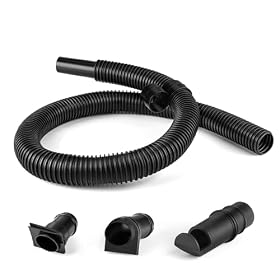 Shop-Vac 9056400 Vacuum Hose Kit, 4 Ft x 1-1/4 Inch with 3 AdaptersShop-Vac
$19.95 as of
View on Amazon 103048 Static-Dissipating Backpack Vacuum Hose Compatible with ProTeam Vacuum Hose with 1-1/2-inch Cuffs, Also fits…Adabuing
$17.99 as of
View on Amazon
Product prices and availability are accurate as of the date/time indicated and are subject to change. Any price and availability information displayed on Amazon.com at the time of purchase will apply to the purchase of this product.
Check the outlet and use the vacuum safely
Use an outlet with a properly functioning ground, and never remove the plug’s grounding pin or use an adapter that defeats it. A plug-in outlet tester can flag some wiring problems, but it cannot confirm every aspect of an outlet’s safety. If you suspect faulty wiring, ask a qualified electrician to check it.
Static control does not make an ordinary shop vac safe for flammable vapors, flammable liquids, or combustible dust. Use only equipment specifically rated for the material and environment; follow the vacuum and material manufacturers’ instructions. If you are unsure whether a dust or vapor is combustible, do not vacuum it with a standard shop vac.
If static shocks continue
- Inspect the hose and connections. With the vacuum unplugged, look for a damaged, loose, or incompatible hose and check that any approved grounding connection is still in place.
- Check the filter and airflow. A clogged or incorrectly installed filter can affect airflow and collection. Clean or replace it as the manual directs, and clear blockages with the vacuum unplugged.
- Confirm the setup. Make sure the hose, filter, drum, and other parts are fitted correctly. Empty a full drum or replace a full bag if your model uses one.
- Consider the conditions. Very dry air can make static more noticeable. Don’t add water or dampen the hose or electrical components as a workaround.
- Stop if the vacuum body shocks you. Unplug it and seek qualified service. A repeated static zap from the hose may call for a compatible anti-static hose or replacement grounding part; replace a damaged vacuum rather than continuing to use it.
The practical takeaway
For static on a plastic hose, the useful fix is a designed conductive path—not changing the vacuum’s power cord or making a DIY connection to household ground. Start with the manual, use compatible static-control parts, and treat any shock from the vacuum’s body as a possible electrical fault.
FAQ
Does a grounded outlet stop static shocks from a shop vac hose?
Not necessarily. The outlet ground protects against certain electrical faults, but a plastic hose may still hold static charge unless it has a compatible path designed to dissipate it.
Can I wrap a wire around my shop vac hose to ground it?
Don’t use an improvised wire connection. Use only a manufacturer-approved anti-static hose or grounding kit installed according to its instructions.
Is an anti-static shop vac safe for combustible dust?
Not by that feature alone. Use equipment specifically rated for the material and environment, and follow the manufacturer’s safety instructions.