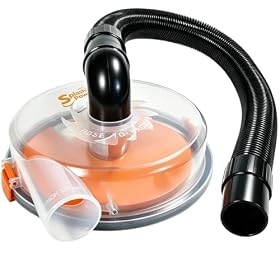
A shop vac collects chips instead of scattering them, making it the better choice for most cleanup. Compressed air can help with hard-to-reach spots, but it spreads debris and calls for extra eye and respiratory protection.
Quick answer {#quick-answer}
For most workshop cleanup, use a shop vac: it picks up chips instead of sending them across the shop or into your eyes, lungs, and equipment. Compressed-air blow-off is useful for debris in tight crevices, but it scatters chips and can drive dust deeper into a tool. If you use it, follow the tool and compressor manufacturers’ instructions and wear appropriate eye and respiratory protection.
Neither method replaces dust collection while a machine is cutting. Use the machine’s dust port or a suitable dust-collection setup when available, then use a vac or careful blow-off for leftover debris.
Product prices and availability are accurate as of the date/time indicated and are subject to change. Any price and availability information displayed on Amazon.com at the time of purchase will apply to the purchase of this product.
When a shop vac is the better choice {#shop-vac-for-chips}
A shop vac is generally the better all-around option for benches, floors, tool surfaces, and cleanup near other equipment because the chips go into a drum rather than flying around. It also makes it easier to remove debris from a work area without pushing it into corners or onto nearby projects.
Check the hose and nozzle before choosing a vac for the job. A narrow hose may clog on large, curly shavings or bulky chips; a wider hose or nozzle can pass larger debris more easily. For fine dust mixed with chips, use a filter and collection setup approved for that material. Empty the drum before it becomes packed, since a full drum can reduce usable capacity and make cleanup messier.
For very large volumes of chips, a shop vac may fill quickly. A dust collector or a suitable chip-separation setup may be more practical for ongoing machine use; a shop vac is often better for spot cleanup.
Product prices and availability are accurate as of the date/time indicated and are subject to change. Any price and availability information displayed on Amazon.com at the time of purchase will apply to the purchase of this product.
When compressed air can help {#when-compressed-air-helps}
A blow gun can reach narrow gaps, corners, and recesses that are awkward to vacuum. It may be useful for a small amount of debris when you can direct it into a controlled collection area.
The tradeoff is that blow-off moves debris rather than capturing it. Chips can ricochet, settle elsewhere, or enter vents and other openings. Avoid blowing debris toward people, pets, open machinery, or electrical equipment. Do not use compressed air to clean clothing or skin. Follow the equipment maker’s instructions, and use appropriate eye and respiratory protection; a vacuum is usually the more controlled choice when dust is present.
Choose by the cleanup job {#choose-by-cleanup-job}
Floor, bench, or general workshop cleanup: Use a shop vac with a nozzle suited to the debris.
Large, curly chips: Use a hose and nozzle that can pass them without frequent clogging; check the hose if pickup suddenly drops.
Tight crevices: Try a compatible narrow vacuum attachment first. Use compressed air only when you can control where debris will go.
Frequent cleanup at a woodworking machine: Connect suitable dust collection to the machine if it has a dust port. A shop vac may work for some tools, but confirm hose compatibility and whether the setup is intended for the volume of chips produced.
Fine dust mixed with chips: Prefer capture with an appropriate filter and collection setup. Do not blow fine dust into the room.
If the vac is not picking up chips well, check the filter first. A clogged or unsuitable filter can restrict airflow; clean or replace it only as the manufacturer directs. Then check the hose, nozzle, and tool port for a blockage, and make sure connections are secure. A loose connection can reduce pickup. Finally, check whether the drum is full and whether the nozzle opening is too small for the chips.
Unplug the vacuum before clearing a blockage or servicing it. If pickup remains poor after the hose and filter are clear and the setup is correct, inspect for damaged seals or a failing motor according to the manual. Replace a worn compatible part when that is the cause; consider replacing the vac if the motor or housing is damaged and repair is not practical.
Bottom line {#bottom-line}
Choose a shop vac for routine chip cleanup because it captures debris and keeps the work area more controlled. Use compressed air only for limited, hard-to-reach cleanup when you can manage the debris and follow safe operating guidance. For chips and dust produced continuously by a machine, use an appropriate dust-collection setup rather than relying on either cleanup method alone.
FAQ
Is compressed air or a shop vac better for wood chips?
A shop vac is usually better for general cleanup because it captures chips instead of scattering them. Compressed air can reach tight gaps, but it may propel chips and dust into the surrounding area.
Can a shop vac pick up large wood chips?
Often, but bulky or curly chips can clog a narrow hose or nozzle. Use a compatible wider opening if available and clear clogs with the vacuum unplugged.
Can I blow sawdust out of a power tool with compressed air?
Only if the tool manufacturer permits it and you can control where debris goes. Blow-off may push dust deeper into openings, so use appropriate protection and consider vacuuming instead.